Lawmakers consider statewide action
Wildfire has become one of the most serious threats facing Colorado’s rural and suburban communities. Electric cooperatives are responding with detailed planning, stronger systems, innovation, and close collaboration with fire agencies and local governments. As the General Assembly considers wildfire policy this session, co-op leaders agree that it is time for statewide action. Their message is clear: Electric co-ops are doing everything they can to reduce wildfire risk, but current law leaves their consumer-members vulnerable to devastating financial impacts that could ripple across entire communities.
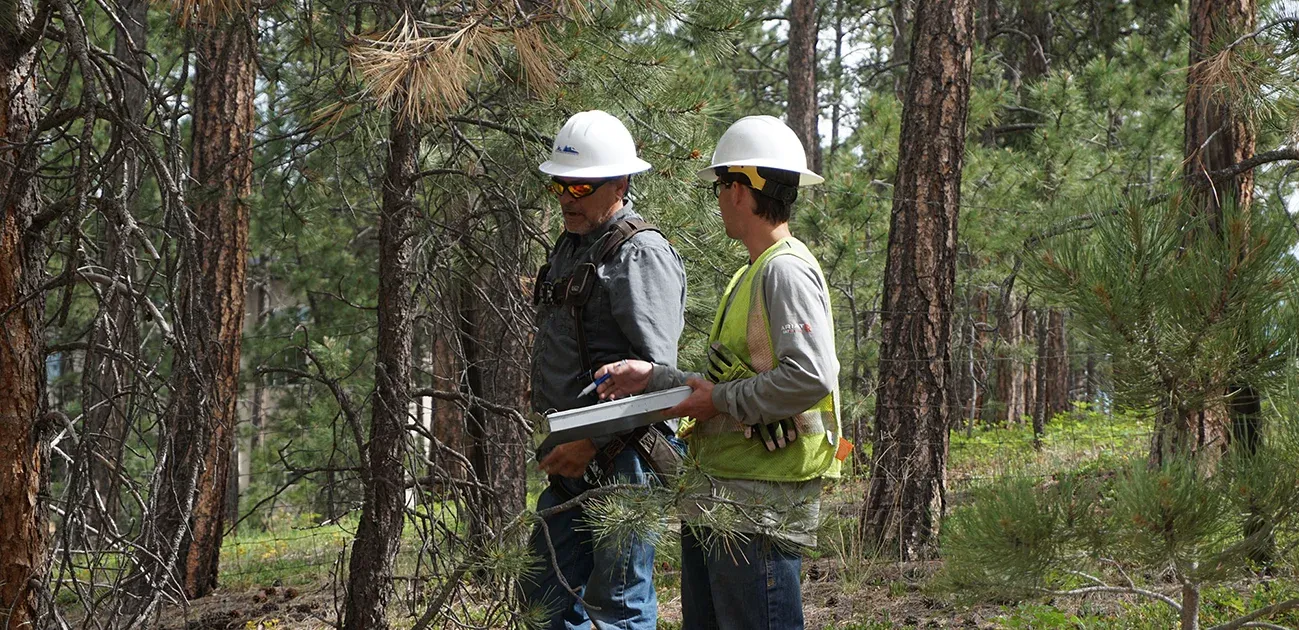
Colorado’s electric co-ops have spent years building wildfire mitigation plans grounded in field experience, engineering data, and close coordination with local officials. These plans are comprehensive. They guide vegetation management practices and schedules, inspections, investment in new technology such as artificial intelligence, targeted undergrounding of power lines where feasible, and operational changes during high-risk conditions.
At Falcon-based Mountain View Electric Association, the plan reflects collaboration across the entire cooperative. “Our Wildfire Mitigation Plan was built through a true team effort across several departments: engineering, operations, safety, mapping, communications, and leadership,” MVEA Chief Executive Officer Ruth Marks said. “To develop the plan, we relied on a wildfire risk model, detailed infrastructure data, years of inspection and outage records, and new tools like satellite vegetation scans and drone imagery.”
Highline Electric Association’s approach followed the same principle. General Manager Dennis Herman said the Holyoke-based cooperative assembled a cross functional team and reviewed plans from other Colorado co-ops to identify proven practices. “We developed the outline of our plan by utilizing the components that were most relevant to our service area and the communities we serve,” Herman said. “Our Wildfire Mitigation Plan supports our mission to provide safe, affordable, and reliable energy to our members.”
Sangre de Cristo Electric Association, based in Buena Vista, is formalizing its plan this year. “It will outline everything we are already doing and the tools we use to monitor fire risk,” SDCEA Chief Executive Officer Jon Beyer said. “Our chief operations officer, our line superintendent, and I are developing it together to ensure it reflects the realities of our five-county service territory.”
The Challenge
Even with strong mitigation efforts and detailed plans, electric co-ops cannot eliminate every risk. One spark in extreme conditions can cause damage far beyond what a consumer-owned utility can absorb. Unlike investor-owned utilities, co-ops do not have large shareholder reserves, and when a cooperative faces unexpected costs, those costs fall directly on families, farms, and small businesses.
This is a public policy gap that needs attention and one that lawmakers will be considering in the 2026 session. We at CREA are working with our 22 member cooperatives to seek reasonable, bipartisan solutions that continue to ensure accountability for negligence, while recognizing responsible mitigation work and protecting co-ops and their consumer-members from unpredictable financial harm.
The goal of the legislation is simple: Address the financial risk co-ops face if their electric infrastructure unintentionally ignites a wildfire, and create a fair, predictable framework that protects consumer-members.
It is important to note that none of the large wildfires in recent memory were caused by co-op equipment, yet co-ops remain fully exposed under current state liability laws.
The Cost of Inaction
“Reasonable damage limits that protect electric co-ops’ ability to serve their communities are extremely important,” Beyer said. “Most co-ops are one spark away from potential bankruptcy when it comes to a major fire.” He added that the financial stakes for the communities electric co-ops serve cannot be ignored. “All expenses, whether it be insurance costs or settlement awards, would be paid for by the consumer-members of a cooperative. This directly affects the affordability of our service.”
Marks explained why co-ops are asking for clear statutory standards. “Under current Colorado law, a co-op can be held fully liable for a wildfire even when it followed every reasonable mitigation step,” she said. “A single event could bankrupt a cooperative or force significant rate increases. Fair and predictable standards that recognize mitigation work protect our members and support responsible operation.”
How to Effectively Connect With Legislators
Reaching out to your lawmakers is one of the most effective ways to make sure your voice is heard at the Capitol. Here are simple steps to make your outreach meaningful and memorable.
- Lead with respect and understanding. Legislators and their staff carry heavy workloads, so a courteous tone and a simple acknowledgment of their time will set the right foundation. Even when you disagree on a policy, remember they are working to solve a problem, and your perspective can help them get it right.
- Keep your message clear and personal. Focus on the heart of the issue, why it matters to you, and how it affects your community or electric co-op. A short personal story often carries more weight than policy jargon.
- Explain your position and the impact. Help lawmakers understand how a proposal influences safety, affordability, or reliability in your region. Sharing real-world examples is powerful.
- Do a little prep work. Knowing a legislator’s district or committee assignment helps you frame your perspective in a way that resonates with their priorities.
- Build ongoing relationships. Advocacy is strongest when it stretches beyond a single meeting. Attend town halls, introduce yourself at community events, and stay connected throughout the year.
- Close the loop. After the conversation, send a brief thank-you message that reiterates your key points and keeps the relationship moving forward.
Engaging with legislators is about sharing your story and showing how policy decisions shape life in Colorado. When members speak up, it helps protect safe, affordable, reliable power for communities across the state.
Insurance Pressures and Legislative Goals
Insurance pressures add another layer of urgency for every co-op and its members. “Wildfire affects our ability to obtain affordable insurance coverage,” Herman said. “Legislation has the potential to improve our ability to provide affordable service.”
Co-op leaders also view the legislative conversation as an opportunity to educate policymakers about issues that truly impact their communities. “This legislation creates an opportunity for legislators to learn more about the cooperative business model, our collective wildfire mitigation efforts, and the communities we serve,” Beyer said.
As lawmakers consider proposals, co-ops are staying focused on their mission. “By limiting the risk of catastrophic financial losses and providing clear guidelines, legislation supports our ability to provide reliable and affordable electricity,” Marks said.
Herman pointed to the long-term value of ongoing mitigation work. “Implementing a wildfire mitigation plan increases reliability by reducing risks and damages. Every dollar saved on insurance is a dollar saved by our members or invested back into the system,” he said. Herman added that most people do not think of the Eastern Plains as a place where sweeping wildfires are prominent, but it is still a requirement to have a mitigation plan to maintain insurability.
Cooperation Among Cooperatives
The sixth cooperative principle, Cooperation Among Cooperatives, remains one of the core strengths of Colorado’s cooperative utilities. Beyer said unity is essential. “It will take our collective voice to educate policymakers, the public, and other stakeholders about the importance of this legislation. That will be the key in getting this across the finish line.”
Marks said working together is critical for lawmakers to understand the statewide stakes. “No single co-op can advance major policy changes alone,” she said. “But together, Colorado’s electric co-ops represent 1.5 million consumers and a significant portion of Colorado’s electric infrastructure.”
Concern for Community
Local partnerships also matter. Co-ops coordinate closely with fire districts, emergency management agencies, and local government leaders to align planning and response strategies. “We collaborate to protect the people and the assets of the communities we serve,” Beyer said.
Herman added that mitigation techniques, such as when to de-energize lines, must be made with local firefighting needs in mind. “De-energizing lines may not be the best course of action,” Herman said. “There have been instances in recent years where firefighters depended on water pumped from local wells to put out a fire.”
Marks said community conversations help make the plan stronger. “We review high-risk areas, discuss operational protocols, and align our planning with emergency response strategies,” she said. MVEA also conducts direct outreach through community meetings and safety education.
Call to Action
The legislative session begins January 14, and electric co-op leaders encourage all consumer-members to stay involved. “Stay informed and communicate with your legislators,” Marks said. “Even a simple email explaining why safe, reliable, and affordable electricity matters to you, your family, or your business can make a difference.” Herman encouraged members to reach out to their local co-op for updates and resources.
Co-op leaders hope lawmakers end the session with a practical, bipartisan policy that reflects both the risks and the progress already made. Beyer summarized it simply: “We are working together to find answers to this extreme risk.” Marks underscored the broader picture. “Co-ops are leading the way on wildfire mitigation, yet current liability laws leave co-op members and rural communities financially exposed,” she said. “Balanced reform will allow us to continue this work without jeopardizing affordability or stability.”
Herman added the bottom line: “Wildfire legislation is a commonsense approach that will improve our ability to provide affordable, reliable service to our members.”
Colorado’s electric cooperatives are positioned and ready to keep investing in, innovating for, and partnering with the communities they serve. With thoughtful action from state leaders, the state can take a meaningful step toward reducing wildfire risk and protecting the people who call Colorado home.
Author: Taylor Ward is the director of government relations for the Colorado Rural Electric Association, the statewide organization supporting 21 electric distribution cooperatives and one generation and transmission cooperative.
This story was originally published in Colorado Country Life magazine.